
How to Choose the Right Tractor in Nigeria
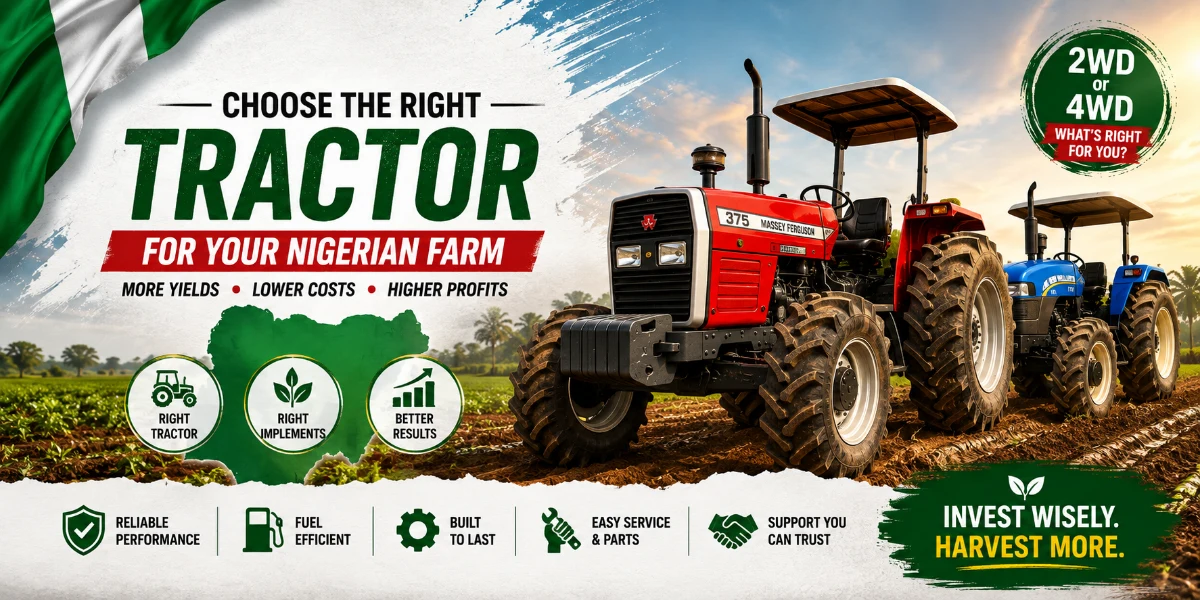
Buying the right tractor is an important decision for farmers, commercial farms and agricultural businesses in Nigeria. The best tractor for your farm depends on several factors, including farm size, crops, soil conditions, terrain, implements, horsepower, drivetrain and expected workload.
A tractor suitable for a small vegetable farm may not be powerful enough for commercial maize, cassava, rice or other large-scale farming operations. Likewise, buying a tractor that is much larger than your actual requirements can increase fuel, maintenance and operating costs.
For Nigerian farmers, it is also important to consider the rainy and dry seasons, soil conditions, availability of spare parts, after-sales support and access to suitable agricultural implements.
Before buying a tractor in Nigeria, consider your land, the work you need to perform, the implements you will use and the conditions in which the tractor will operate. These factors will help you choose a tractor that delivers the right balance of power, productivity and operating cost.
Start With Your Farm Requirements
The first step is to understand exactly what you need the tractor to do.
Farmers in Nigeria work with different crops, farm sizes and soil conditions. A small farm growing vegetables may require a compact or utility tractor, while a commercial farm cultivating maize, cassava, rice, yam or other field crops may need a higher-horsepower tractor with greater pulling capacity.
Before looking at tractor brands or prices, make a list of your regular farm operations. Your tractor may be required for:
- Ploughing
- Disc harrowing
- Cultivation
- Planting and seeding
- Ridging
- Spraying
- Mowing
- Trailer work
- Transporting farm produce
- Operating PTO-driven equipment
- Land preparation
Knowing your main jobs makes it easier to determine the appropriate tractor horsepower and configuration.
What Horsepower Tractor Do You Need in Nigeria?
Horsepower is one of the most important specifications when choosing a farm tractor, but more horsepower does not automatically mean a better tractor.
The correct horsepower depends on your farm size, soil, crops, implements and workload.
Recent Nigeria-focused tractor guidance commonly places smaller farming operations in lower horsepower categories, while medium and commercial farms may require 50HP, 60HP, 75HP or higher depending on the work involved.
20HP to 40HP Tractors
Smaller tractors can be useful for:
- Vegetable farming
- Orchards
- Small farms
- Mowing
- Spraying
- Light cultivation
- General transport
They are easier to maneuver and can be practical where large field equipment is not required.
40HP to 60HP Tractors
The 40HP to 60HP category can be suitable for many small and medium-scale farming operations.
These tractors can be used for:
- Soil preparation
- Cultivation
- Ridging
- Planting
- Spraying
- Trailer work
- General field operations
A 50HP or 60HP tractor can provide a useful balance between working capacity, fuel consumption and purchase cost when matched correctly with implements.
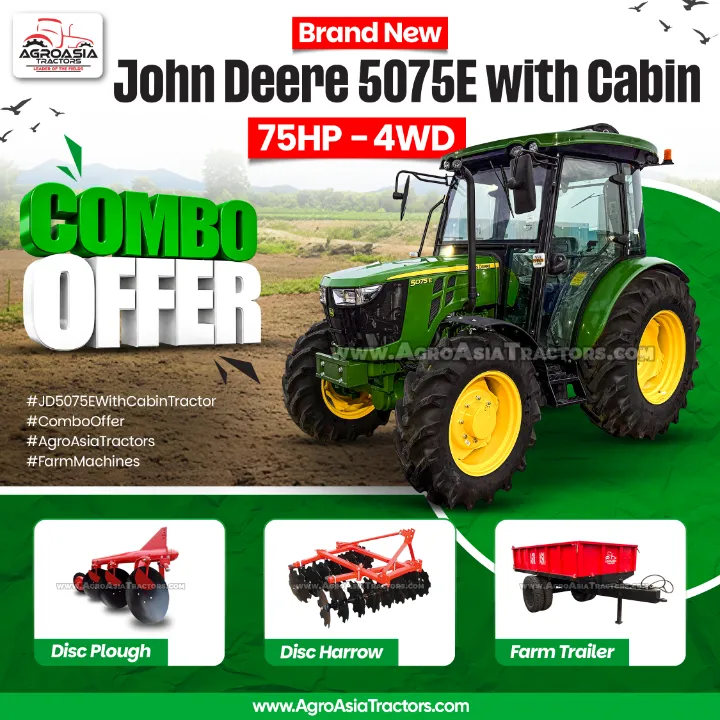
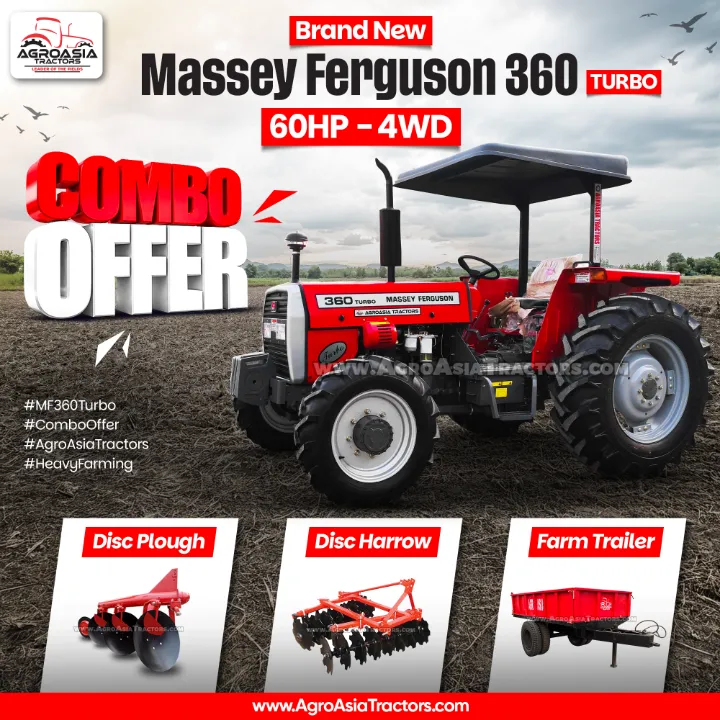
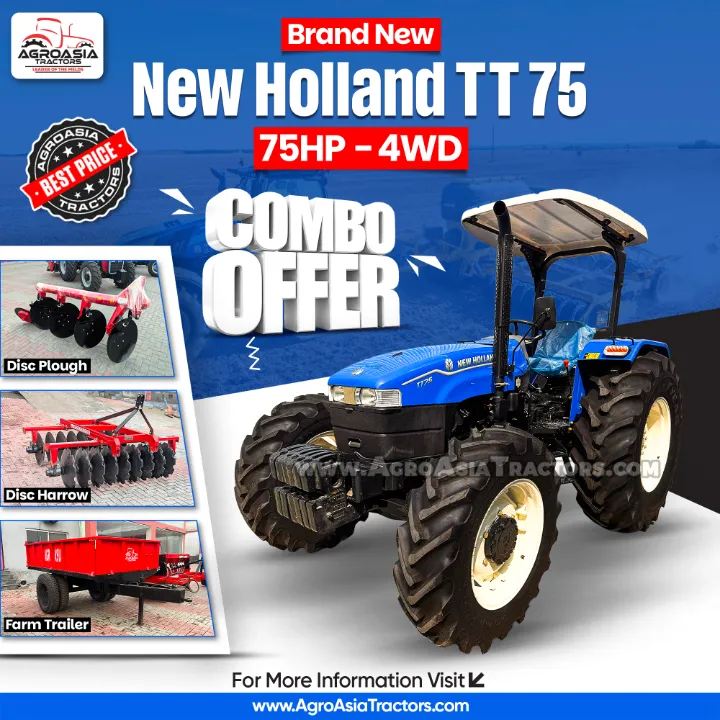
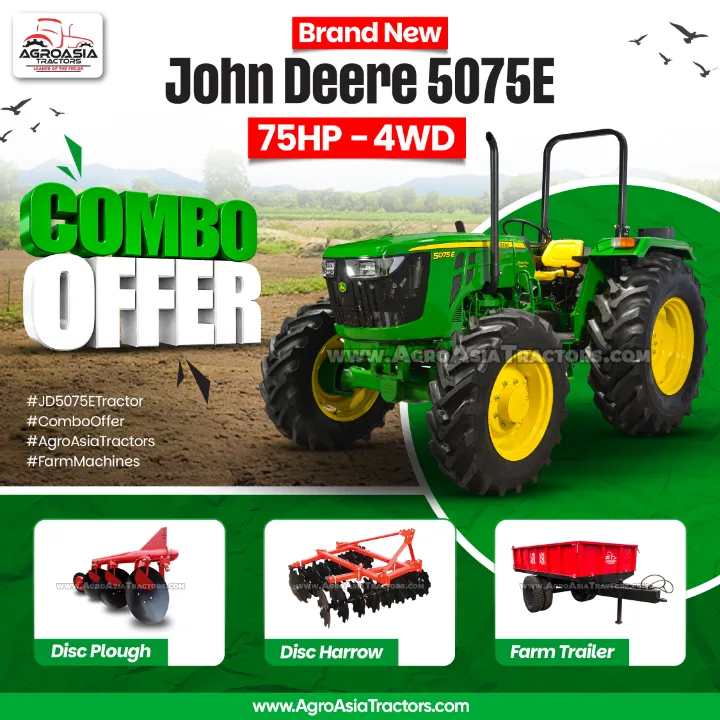
Combo Offers




60HP to 75HP Tractors
Farmers carrying out more demanding field operations may need 60HP to 75HP tractors.
This range can be suitable for:
- Larger farms
- Heavy cultivation
- Ploughing
- Harrowing
- Planting
- Ridging
- Trailer transport
- Commercial farming
For example, 75HP tractors such as the Massey Ferguson MF 375 and New Holland TT75 are commonly listed for the Nigerian market.
75HP and Above
Larger commercial farms and operations using heavier implements may require 75HP, 85HP or higher.
Higher horsepower can provide additional pulling capacity for demanding fieldwork, but the tractor should always be matched to the actual implement and soil conditions.
The goal is not to buy the biggest tractor available. The goal is to buy a tractor that can complete your regular work efficiently.
2WD or 4WD: Which Is Better for Nigerian Farms?
Another important decision is whether to buy a 2WD or 4WD tractor.
Neither option is automatically better for every farm. The correct choice depends on your terrain, soil, workload and operating conditions.
When 2WD Tractors Needed
A 2WD tractor can be suitable for:
- Flat farmland
- Firm and relatively dry soil
- General farm work
- Transport
- Lighter implements
- Farms where difficult traction is not a major concern
2WD tractors can also offer a lower purchase and operating cost in applications where four-wheel traction is not necessary.
When 4WD Is Better
A 4WD tractor can be a better option where additional traction is important.
Consider 4WD if your farm has:
- Wet or muddy soil
- Loose or sandy ground
- Sloping land
- Difficult terrain
- Heavy implements
- Frequent heavy pulling
- Challenging rainy-season field conditions
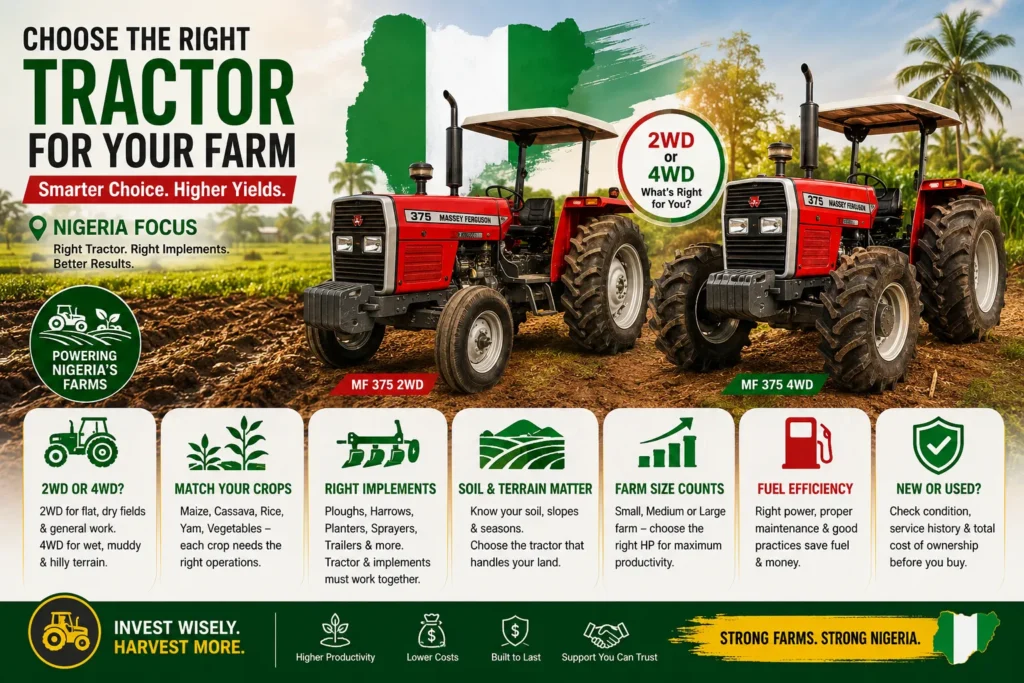
For Nigerian farms where field conditions become difficult during the rainy season, 4WD can provide useful additional traction. A 75HP 4WD tractor such as the Massey Ferguson MF 375 4WD is marketed specifically for demanding agricultural applications and difficult terrain.
Match the Tractor to Your Crops
Your crop type should also influence your tractor selection.
Different crops require different field operations.
For example:
- Maize: Land preparation, ploughing, harrowing, planting, spraying and harvesting support.
- Cassava: Land preparation, ridging, planting and transport.
- Rice: Soil preparation, puddling or other field preparation depending on the production system, planting and transport.
- Yam: Land preparation, ridging and transport.
- Vegetables: Cultivation, spraying, planting and transport.
The tractor should be selected according to the implements required for these operations rather than simply according to farm size.
Don’t Forget Your Implements
A tractor and its implements must work as a complete system.
Before buying a tractor, check the equipment you already own or plan to purchase.
Common agricultural implements include:
- Disc ploughs
- Disc harrows
- Chisel ploughs
- Mouldboard ploughs
- Rotary cultivators
- Planters
- Seed drills
- Boom sprayers
- Ridgers
- Farm trailers
- Rotary slashers
The tractor’s PTO, hydraulic system, three-point linkage and lifting capacity should all be checked before purchasing.
For example, a tractor may have enough engine horsepower but still be unsuitable for a particular implement if its hydraulic capacity, PTO configuration or linkage does not match.
Consider Nigerian Soil and Terrain
Soil conditions can significantly affect tractor performance.
Nigeria has different agricultural environments, so a tractor suitable for one location may not be the best choice for another.
Consider how your land behaves during both the dry and rainy seasons.
Ask yourself:
- Is the soil hard or soft?
- Does the field become muddy during the rainy season?
- Is the land flat or sloped?
- Do you work on sandy soil?
- How deep do you normally plough?
- Which implements do you use most often?
- Does the tractor need to operate on roads between fields?
These answers can help determine whether you need a smaller tractor, more horsepower or 4WD traction.
How Farm Size Affects Tractor Selection
Farm size is an important starting point, but it should not be the only factor.
For smaller farms, a compact or lower-horsepower utility tractor may provide sufficient power without the cost of a large commercial tractor. Nigeria-focused tractor guidance also highlights the practicality of lower-horsepower machines for smallholder operations.
Medium-sized farms may benefit from tractors in the 40HP to 75HP range, depending on soil and implements.
Large commercial farms may require 75HP, 85HP or higher, particularly when using heavy implements for extensive field operations.
Always consider the number of hours the tractor will work and how quickly you need to complete your farming operations.
Think About Fuel Consumption
Fuel is a major running cost for any tractor.
A tractor that is too small for the job may have to work harder when pulling heavy implements. This can reduce productivity and may increase fuel consumption.
At the same time, buying a tractor that is significantly larger than necessary means you may be paying for horsepower you rarely use.
Choose a tractor that has enough power for your normal workload.
Proper maintenance, suitable implement sizing, correct tyre pressure and good operating practices can also help control fuel consumption.
New or Used Tractor in Nigeria?
Farmers can find both new and used tractors in the Nigerian market.
A used tractor may have a lower initial purchase price, but its condition and service history need to be checked carefully.
Before buying a used tractor, inspect:
- Engine
- Transmission
- Hydraulics
- PTO
- Tyres
- Brakes
- Steering
- Electrical system
- Overall condition
- Service history
A brand-new tractor can be attractive for farmers who depend on their machinery throughout the farming season and want a machine with a known operating history and current specifications.
The cheapest tractor is not necessarily the most economical tractor over its lifetime.
Consider the total cost of ownership, including fuel, maintenance, spare parts, downtime and future repairs.
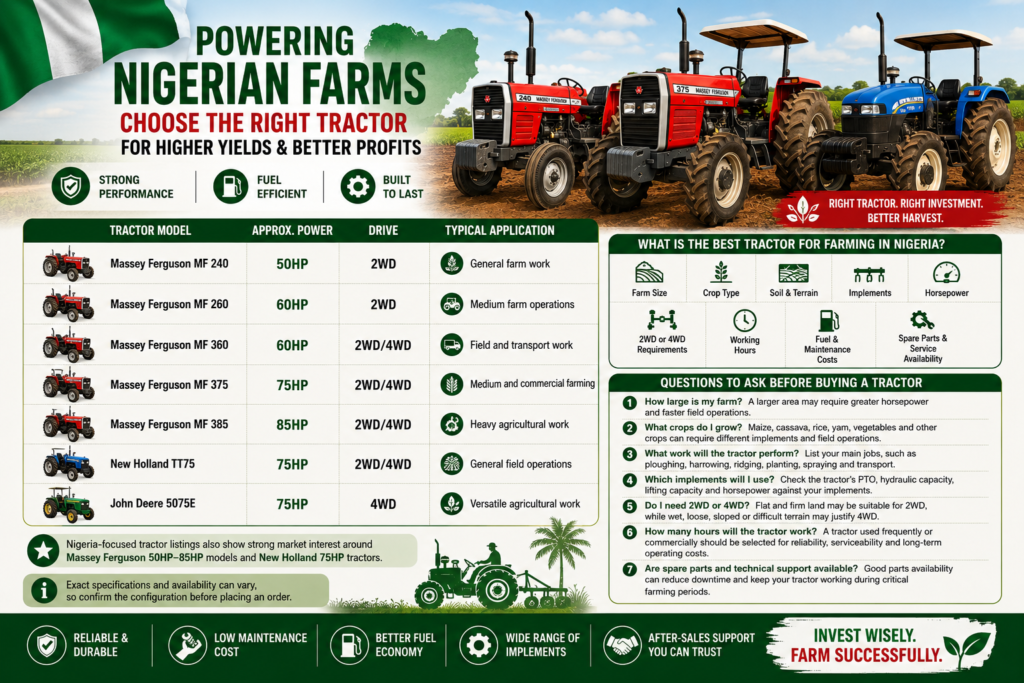
| Tractor Model | Approx. Power | Drive | Typical Application |
|---|---|---|---|
| Massey Ferguson MF 240 | 50HP | 2WD | General farm work |
| Massey Ferguson MF 260 | 60HP | 2WD | Medium farm operations |
| Massey Ferguson MF 360 | 60HP | 2WD/4WD | Field and transport work |
| Massey Ferguson MF 375 | 75HP | 2WD/4WD | Medium and commercial farming |
| Massey Ferguson MF 385 | 85HP | 2WD/4WD | Heavy agricultural work |
| New Holland TT75 | 75HP | 2WD/4WD | General field operations |
| John Deere 5075E | 75HP | 4WD | Versatile agricultural work |
Nigeria-focused tractor listings also show strong market interest around Massey Ferguson 50HP–85HP models and New Holland 75HP tractors.
Exact specifications and availability can vary, so confirm the configuration before placing an order.
What Is the Best Tractor for Farming in Nigeria?
There is no single tractor that is the best for every Nigerian farmer.
The best tractor depends on:
- Farm size
- Crop type
- Soil conditions
- Terrain
- Implements
- Required horsepower
- 2WD or 4WD requirements
- Working hours
- Fuel and maintenance costs
- Spare parts and service availability
For smaller farms, a compact or lower-horsepower tractor may be sufficient.
For medium-scale farming, 50HP to 75HP tractors can offer a practical balance of power and versatility.
For larger commercial farms and heavy fieldwork, 75HP or higher may be more appropriate.
The right answer should always be based on the actual work the tractor needs to perform.
Questions to Ask Before Buying a Tractor in Nigeria
Before placing your order, answer these questions:
- How large is my farm?
A larger area may require greater horsepower and faster field operations. - What crops do I grow?
Maize, cassava, rice, yam, vegetables and other crops can require different implements and field operations. - What work will the tractor perform?
List your main jobs, such as ploughing, harrowing, ridging, planting, spraying and transport. - Which implements will I use?
Check the tractor’s PTO, hydraulic capacity, lifting capacity and horsepower against your implements. - Do I need 2WD or 4WD?
Flat and firm land may be suitable for 2WD, while wet, loose, sloped or difficult terrain may justify 4WD. - How many hours will the tractor work?
A tractor used frequently or commercially should be selected for reliability, serviceability and long-term operating costs. - Are spare parts and technical support available?
Good parts availability can reduce downtime and keep your tractor working during critical farming periods.
Frequently Asked Questions
What is the best tractor for farming in Nigeria?
The best tractor depends on your farm size, crops, soil, implements and workload. Small farms may need lower-horsepower tractors, while medium and commercial farms may require 50HP, 60HP, 75HP or higher.
What horsepower tractor is good for a small farm in Nigeria?
For smaller farms and light-to-medium work, tractors in the 20HP to 50HP range can be suitable depending on the implements and soil. Smallholder-focused Nigerian tractor guidance also identifies 15HP to 50HP as a practical range for many smaller operations.
Is 4WD better than 2WD for farming in Nigeria?
4WD can be better for wet, muddy, loose, sloping or difficult fields because it provides additional traction. For flat and firm land with lighter work, 2WD may be sufficient.
How much does a tractor cost in Nigeria?
Tractor prices in Nigeria vary significantly according to brand, horsepower, drivetrain, condition, specifications, implements and supplier. Current online Nigerian listings show substantial variation, so farmers should compare the complete tractor specification and total ownership cost rather than choosing solely by advertised price.
Which tractor brands are available in Nigeria?
Massey Ferguson, New Holland and John Deere are among the tractor brands available for Nigerian agricultural applications. Different models are available across horsepower ranges and 2WD/4WD configurations.
Where can I buy a new tractor for Nigeria?
AgroAsia Tractors supplies brand-new tractors and agricultural machinery for international markets, including models suitable for Nigerian farming requirements. Farmers and agricultural businesses can discuss tractor specifications, availability, implements and shipping options before ordering.
Final Thoughts
Choosing the right tractor in Nigeria is about finding the correct balance between power, productivity, operating cost and reliability.
Start with your farm and the work you need to perform. Then compare horsepower, 2WD or 4WD, implements, soil conditions, fuel consumption, maintenance requirements, spare parts and after-sales support.
Do not buy a tractor simply because it has more horsepower or a lower price. Choose a machine that can comfortably handle your actual farming requirements today while giving you reasonable capacity for future growth.
If you are looking for tractors for sale in Nigeria, agricultural implements or brand-new tractors for export, AgroAsia Tractors can help you compare suitable models and specifications for your farming requirements, which are available by filling out our inquiry form.
